Bold and Beautiful Calathea
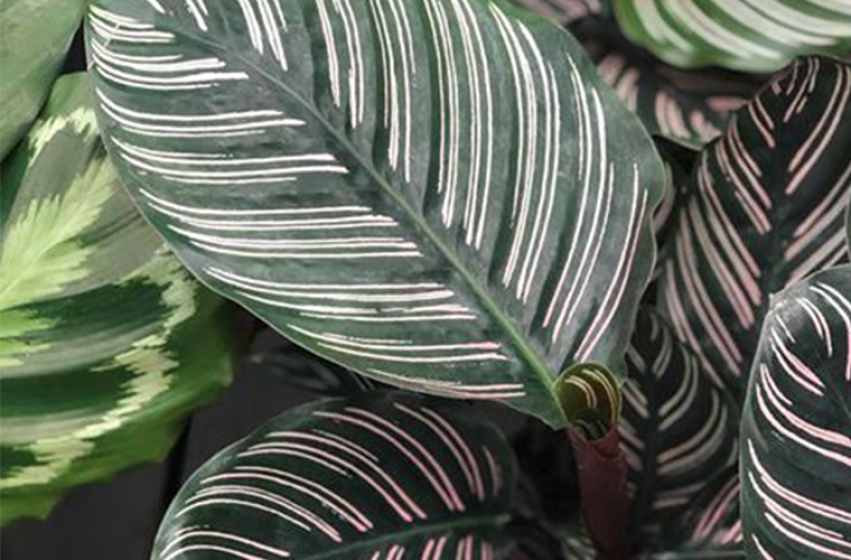
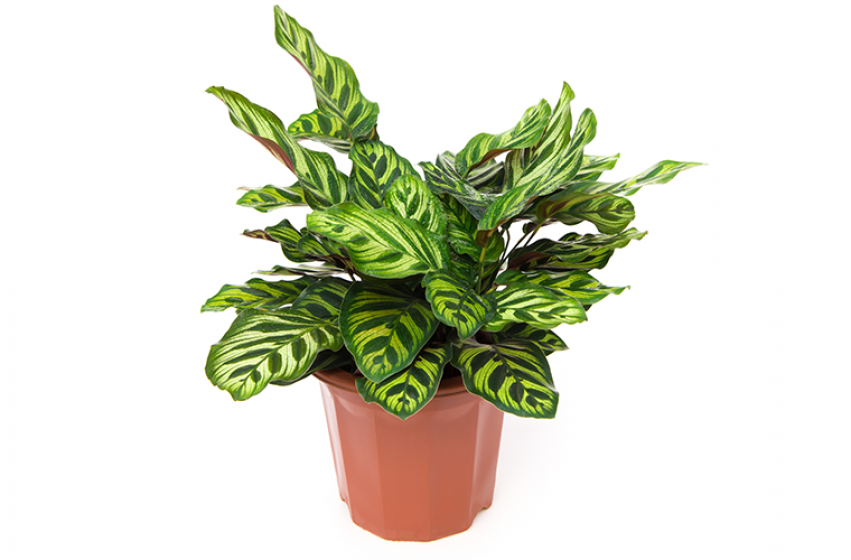
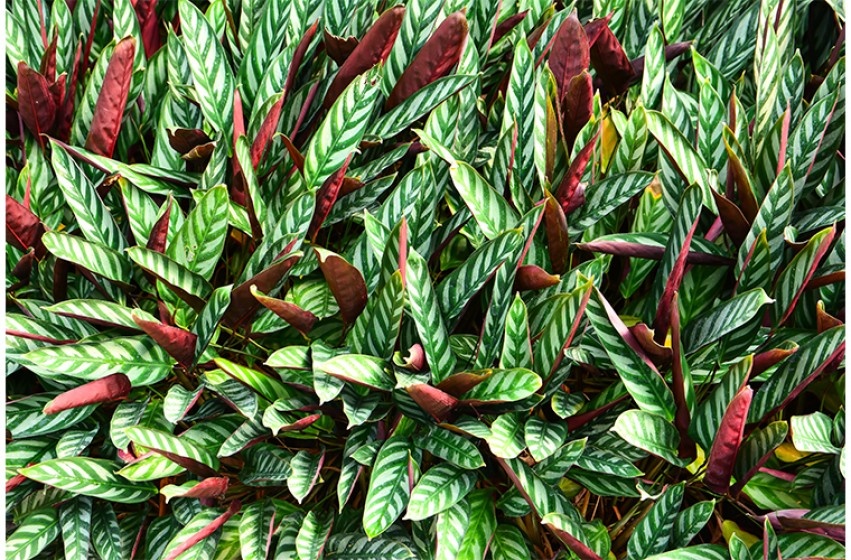
Calathea is a tropical plant also known as the Zebra plant or Zebrina plant (Calathea zebrina). These trendy houseplants are loved for their large, oval, distinctly patterned, and vibrantly colored leaves. Leaves can be curved, ribbed, round, oval or pointed and exhibit various unique patterns. Leaf colors range from yellow, rose, white, and even olive. Calathea’s fancy foliage makes smaller varieties an excellent choice for tabletops, and larger specimens are suitable as a floor plant.
Calatheas originate from the jungles of the Amazon in South America, growing beneath the shady layers of overgrown foliage in warm, humid conditions making them a perfect fit for low-light areas within your home such as a bathroom or hallway or any room that receives limited amounts of light.
Calathea plants can be a beautiful addition to your home. Just make sure to take the time to provide it with everything it needs. Here are the basic Calathea care requirements:
LIGHTING REQUIREMENTS:
Calathea prefer bright, indirect light; so, placing it in front of an east, west, or north window is ideal. Too much direct sun can burn the leaves and may cause leaf colors to fade.
WATERING:
Keep the soil moist but never soggy. Allow the top 2-3 inches to dry out before watering. Never let a Calathea plant sit in water. Water as soon as the surface begins to dry up. During the cooler and darker winter months, you may water a little less.
FERTILIZER:
Feed your Calathea monthly in the spring, summer, and fall with a basic houseplant food and follow the directions on the package. Feed only during the growing season.
TEMPERATURE:
Calathea like temperatures between 65-80 degrees and do not like cold drafts or temperatures below 55-60 degrees.
HUMIDITY:
Humidity is a must for a Calathea plant. Brown leaf edges may be a sign that the air is too dry. Humidity can be increased by placing your Calathea on a tray of wet pebbles (be sure the pot is on the pebbles and not in the water), or by grouping plants together to create a greenhouse effect.
SOIL:
Use a good, light, porous indoor potting soil that retains water but drains quickly.