Peppers Too Beautiful to Eat
Ornamental peppers are absolutely stunning with their flashy kaleidoscope of color. Many gardeners are unaware of the beauty peppers provide to both beds and containers due to their delightfully colored fruit. Much like hot peppers you would grow in your veggie garden, ornamental peppers produce colorful little fruits that are round or pointed. But these varieties are so beautiful in their own right that they can be grown just for show — not to eat. Ornamental peppers are indeed edible, but usually their flavor is lacking compared to the peppers grown for the table such as bell & sweet peppers.
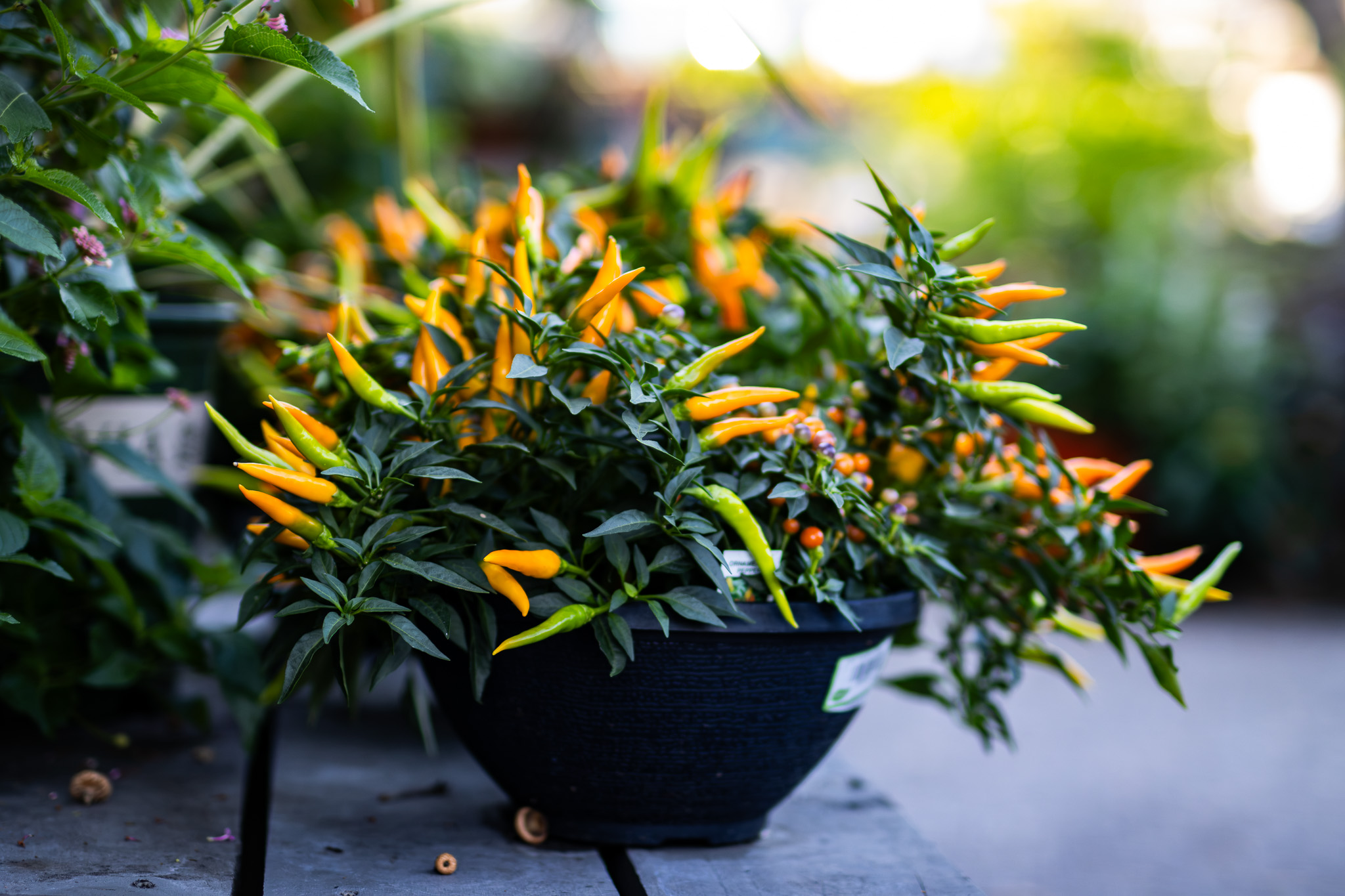
Depending on the variety, ornamental peppers appear in shades of purple, red, orange, and yellow — often with multiple colors on the same plant. They usually have finely shaped leaves and small chili pepper-shaped or ball-shaped fruits. Incorporate these plants into your late summer and fall beds. Ornamental peppers also make a perfect addition to container combos.
Try these varieties to really spice up your garden:
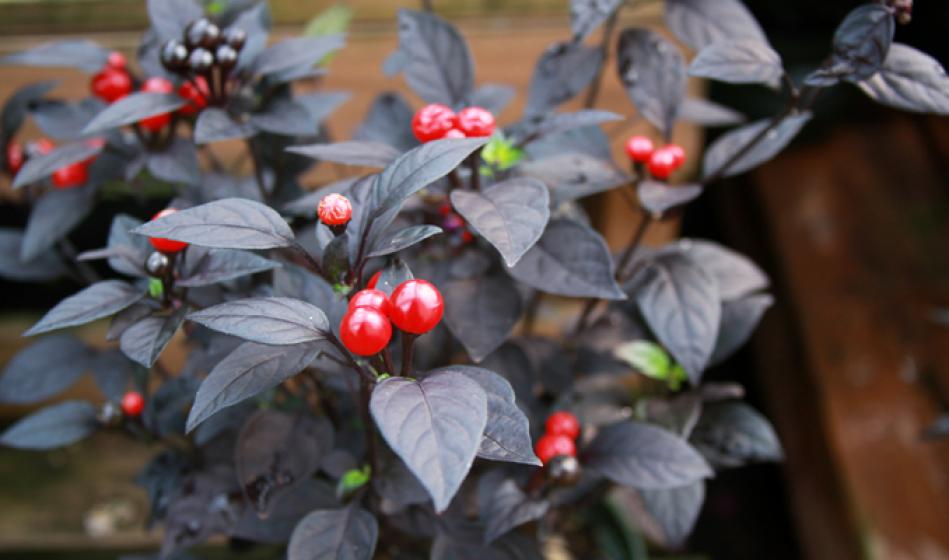
Black Pearl ~ This fun and funky plant is sought after for its deep-purple-black leaves and round, shiny black fruit that ages to glistening red spheres.
Basket of Fire ~ Want some red-hot color? The Basket of Fire is for you! The unique, bushy growing habit makes it perfect for hanging baskets and in containers. This colorful variety becomes smothered with small, hot chillies which mature from deep purple through yellow and orange to a bright shade of scarlet red, creating a fabulous display.
Medusa ~ This multi-colored dwarf pepper grows well indoors as a potted plant and as a bedding plant from spring through Christmas. Medusa boasts a narrow, twisted, cone shaped fruit – held prominently upright over the dark green foliage. Fruit starts out ivory, turns to yellow, then orange, and finally bright red. A single plant can produce 40 to 50 fruits, displaying the entire range of colours at one time.