A Christmas Tradition
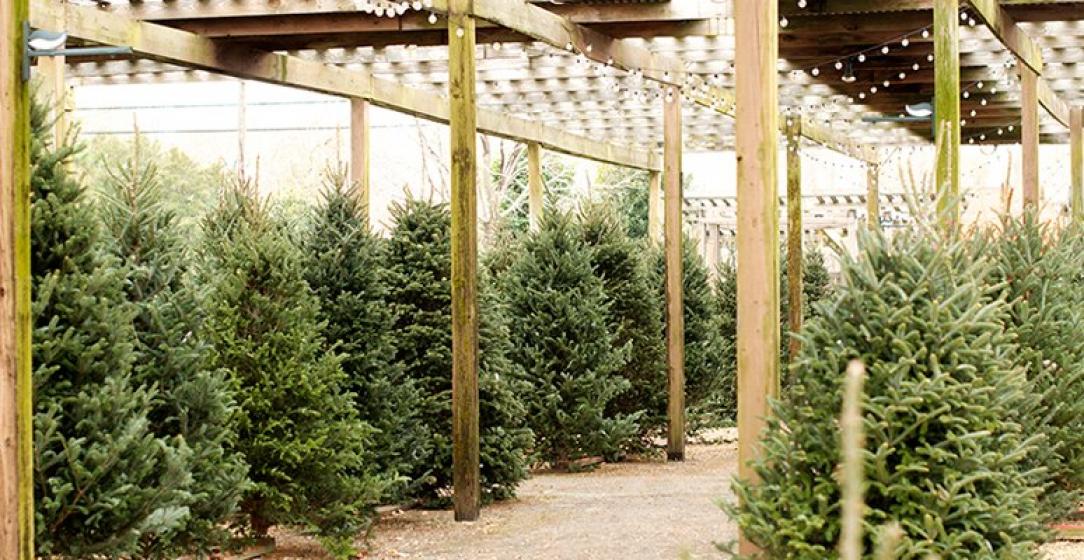
THE FRASER FIR
Bring the family out to experience your local Christmas Shoppe as you select the perfect family tree this year! Available from 2 feet all the way up to 12 feet.
The Fraser fir was named for John Fraser, a Scottish botanist who explored the southern Appalachian Mountains of North Carolina in the late 1700s. It is a pyramid-shaped tree that reaches a maximum height of 80 feet and a trunk diameter of 1-1/2 feet. The species is sometimes called Southern balsam or Southern balsam fir.
The Fraser fir grows naturally only in the southern Appalachians, above 3,000 feet. The cool temperatures and lots of rainfall of the North Carolina High Country are what causes the Fraser fir to keep its needles throughout the Christmas season. The strong branches are turned slightly upward which gives the tree a compact appearance and makes it perfect for decorating.
Over 50 million Fraser firs are grown in North Carolina on 25,000 acres for use as Christmas trees, and the Fraser fir represents over 90% of all the trees grown in North Carolina as Christmas trees. Christmas Trees haven’t always been a Christmas Tradition. No one really knows who put up the first Christmas tree, but some historians believe that even the Egyptians and Romans used some form of an evergreen to decorate their homes in late December.
What a treasure to purchase a tree grown this close to home! When you purchase a McDonald tree, they come straight from the farm in North Carolina so this Christmas icon will stay fresh and looking good all season long.