For the Birds…
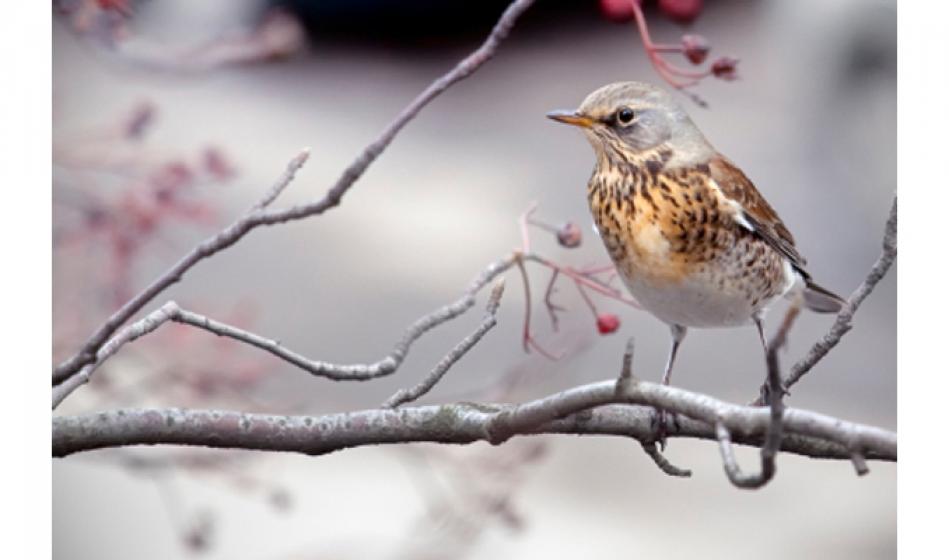
Bird has become one of America’s fastest-growing hobbies, and backyard bird feeding is a convenient way to enjoy these fine-feathered friends. Surveys reveal that nearly half the households in the United States provide food for wild birds.
So what, you may ask, has made watching birds the fastest growing hobby in the country second only to gardening? The attraction is obvious ~ feeding birds brings them closer, so we can see them more easily. Their colorful and entertaining presence is fascinating to observe, especially through the long, dreary days of winter. Setting up a backyard bird feeder can make birds’ lives easier too. Winter is a difficult time for birds, and finding food can be especially challenging during periods of extreme cold.
What should you serve your bird visitors for dinner? If you want to attract many different species of birds, you’ll need to offer a variety of foods. In most areas, black-oil sunflower seed tends to attract the greatest variety of birds. It has a high meat-to-shell ratio and a high fat content. Since it is small and thin-shelled, it is easy for small birds, like the Tufted Titmouse, to handle and crack. Striped sunflower seeds, which are larger, have thicker seed coats. Although sunflower seeds are the all-round favorite, especially for tree-dwelling birds, some birds prefer other types of food. Blackbirds enjoy corn, whereas many ground-feeding birds, like doves, prefer white millet or red milo.
Be wary of commercial seed mixes. They are often a mixture of sunflower seeds plus a high proportion of less appealing ‘fillers’ such as millet, oats, wheat, flax, buckwheat seeds, and red milo. Birds tend to pick out the prized sunflower seeds and leave the rest. Instead, try making your own birdseed mix. Pour about 25 pounds of black-oil sunflower seed, 10-pounds of white proso millet, and 10 pounds of cracked corn into a clean trash can. Use a broom handle to mix it up. Be sure to store your bird food carefully. Keep seed in a dry, cool place, in a rodent-proof, metal can. Be sure to check the seed often for mold, and throw out any seed that is questionable.