Mulching Matters 101
by Kathy Van Mullekom, a lifelong gardener and gardening writer living in York County, Virginia
When husband Ken and I mulch, we really mulch. We don’t mess around.
Each spring, we tidy up and assess our beds, which are large and planted with a mix of evergreen and deciduous shrubs and trees, as well as perennials. We use small-tine metal rakes to fluff up the old mulch, and then decide how much new mulch we need to add.
It’s not healthy to keep adding new mulch without taking away old mulch, or your plants sink and suffocate from too much of a good thing. We remove heavy old mulch and place it in spots that are thin or throw it in our small wooded area where the camellias and hydrangeas love the added humus it creates over time as it decomposes. Mulch eventually decays and turns into some of the best compost you can get, rich with major and minor nutrients that plants need and a haven for beneficial earthworms to live in.
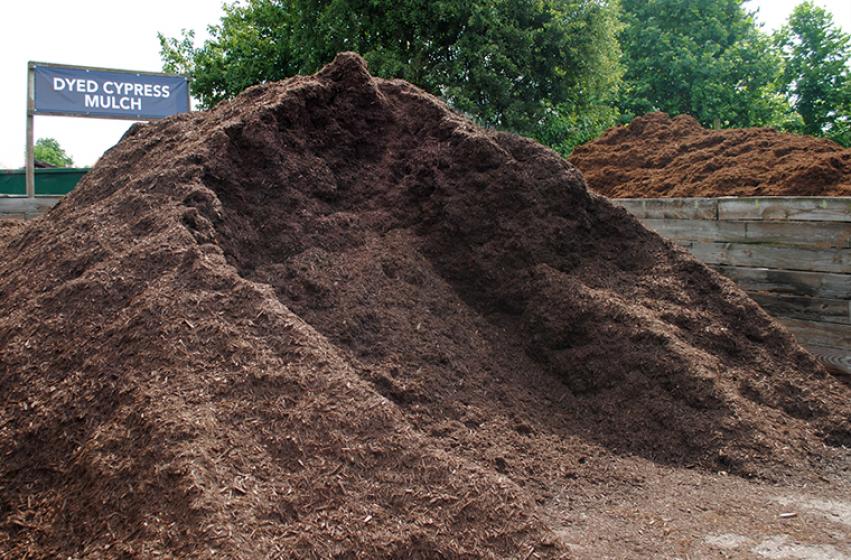
Once we decide how much hardwood mulch we need, we buy it bulk or in bags. Recently, we’ve favored bags because it’s easier for us to handle as we age and still do our own yard work. We order pallets that are dropped off in the driveway.
Ken places all the bags – about 300 per year – and I go behind him, opening the bags with scissors and dumping the mulch into small piles. Ken then goes behind me, using our favorite small-tine metal rake to spread the mulch.
We’ve done the bag mulching for years, and like its flexibility. Extra bags added to the order are stored behind our gardening building, and come in handy when I need to add mulch after planting new perennials – something I’m always doing because who can resist the lure of another pretty perennial.
PHOTO: Mulch enhances the look of statuary and plants in Kathy Van Mullekom’s gardens.