The Scratch Test
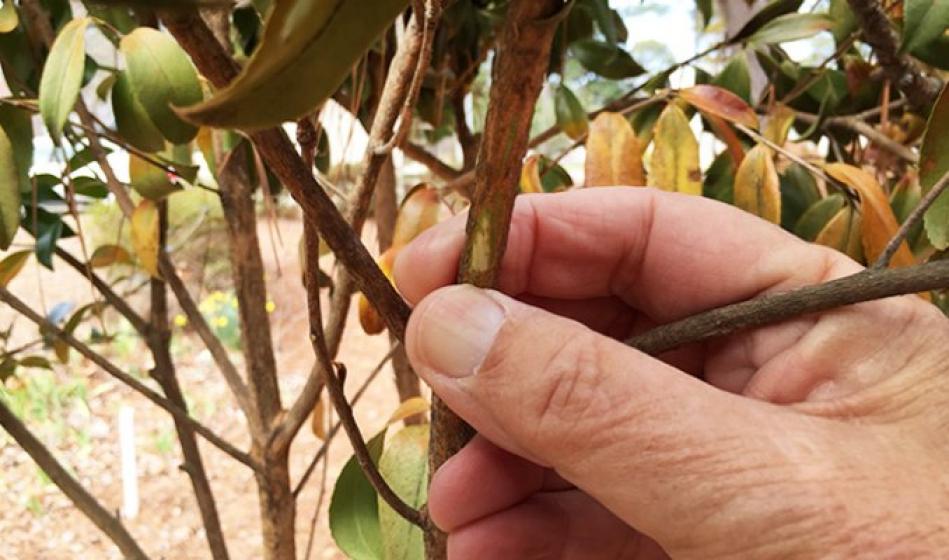
Do the fingernail scratch test before declaring a plant dead.
by Kathy Van Mullekom, a lifelong gardener and gardening writer living in York County, Virginia
Winter’s harsh hand slapped my garden. Thankfully, the damage is seen only on a few plants.
My acre on a small creek in York County endures lots of wind, so much that I sometimes think I live in a NASA wind tunnel. Those cold winter winds can do more damage than frozen soil or heavy snow.
How cold wind damage happens can be puzzling. For example, I have four camellias near each other: two have nice green leaves everywhere while two camellias have leaves severely wind burned and browned across half of the plant (pictured above). I will take a wait-and-see approach before pruning the bad parts.
My wax myrtle hedge also looks sad – few green leaves anywhere.
Gardening friends tell me they see much of the same – browned, wind-desiccated leaves on gardenia, loropetealum and other cold-sensitive plants.
Before you declare any of those victims too damaged to recover, do a fingernail-scratch test. Using your fingernail, or a small knife or anything sharp, scratch some bark tissue along a dead-looking part of the plant. If you see green (pictured above), the plant is alive and will hopefully flush out new growth when warmer weather stabilizes and plants are motivated to get growing.
Once damaged plants have fully leafed out in late spring, prune them to remove any remaining dead parts. Apply a light fertilizer made for the plant variety – for example, acid-loving food for camellia, azalea and gardenia – and keep the plant watered during any hot, dry spells during summer. Plants are usually tougher than we think, and grow back healthy as ever.
PHOTOS: Plants in Kathy Van Mullekom’s garden.