Your Berry Best Yard
Make your yard its berry best for holiday cheer.
by Kathy Van Mullekom, a lifelong gardener and gardening writer living in York County, Virginia
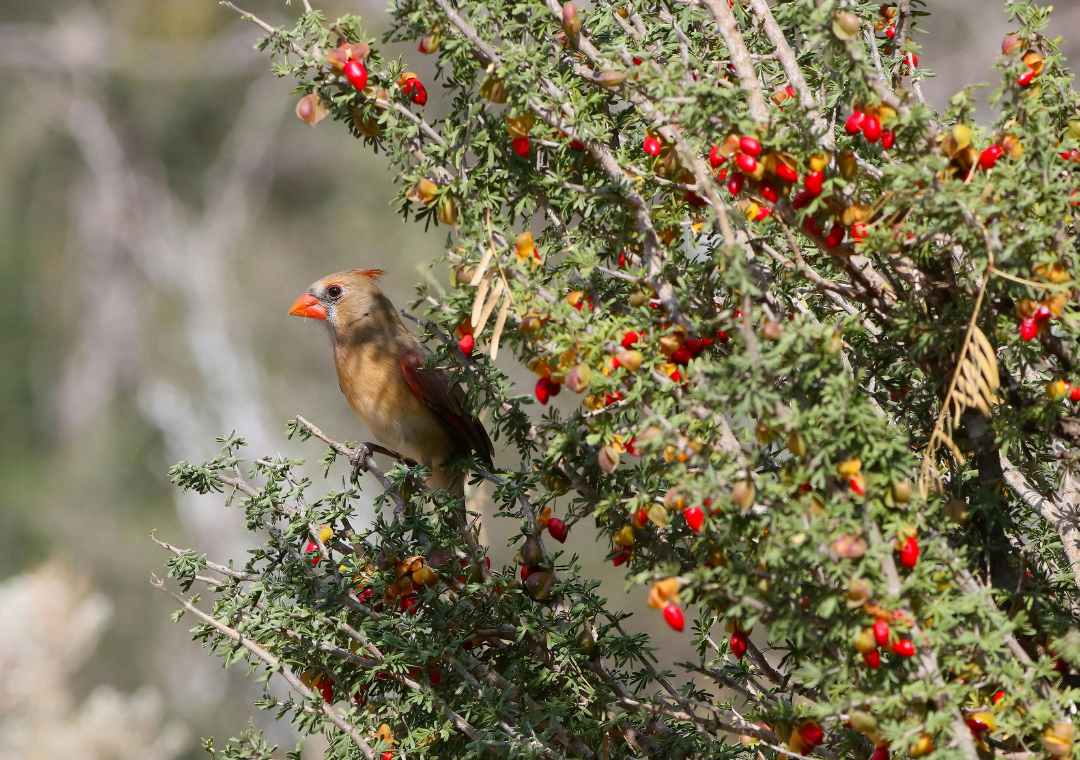
Nothing says “happy holiday” like clusters of bright red berries on a bush.
For me, nandina berries are cherished parts of my December décor because they carry fond memories of days with my grandmother in Lynchburg, Va. A gravel driveway wrapping its way around her red brick home was lined with dozens of nandinas that produced beaucoup berries when cold weather arrived.
At my grandmother’s house, the nandinas were the standard Nandina domestica, nicknamed heavenly bamboo, because they produce suckers that quickly turn into tons of baby plants you can divide and use elsewhere or give away as thoughtful gifts.
As I moved into adulthood, I took the offspring from some of grandma’s nandinas my parents rescued when a highway project claimed her property. Each time I moved, those nandinas went with me, and I recently gave some to my son for his new home in Virginia Beach.
Today, there are many types of berry-making nandinas, including:
- Stunning Sienna Sunrise nandina with fiery red new foliage that cools to lush green in summer and reddens in fall and winter.
- Harbor Belle nandina with burgundy foliage in fall and winter.
- Plum Passion nandina with purplish-red leaves in spring and summer, followed by deeper reds in winter.
Nandinas are no-nonsense plants because they thrive in all growing conditions – sun or shade, wet or dry soil. They know no real pest or disease problems. They can be used as stand-alone specimen plants, as hedges with eye-catching seasonal interest or as shoreline and bank erosion controllers. Standard nandinas are best pruned in late winter or early spring to keep them vigorous; otherwise, they get too tall and leggy and bare at the bottom stems.
All in all, nandina is a fool-proof multi-season evergreen for any yard.
NOTE: McDonald plant selection varies by season and location.