Blueberry Basics
Thinking about growing backyard blueberries? Stick to these six simple steps and with proper care, these sweet treats will reward you for years to come!
- Test the soil and adjust to a pH 4.5 – 5.5. We offer soil test kits for home use and GardenRewards members can get FREE pH soil tests at our year-round Garden Centers. Blueberries require a sunny spot and soil that is acidic, high in organic matter, and well-drained yet moist. pH should ideally be between 4 and 5. When the pH is above 5, they become stunted decreasing berry production. We offer two solutions for acidifying the soil. Soil Sulfur is the best for long term adjustment of pH. Soil acidifier is a good quick adjustment of soil pH, however it may cause aluminum toxicity in blueberries. Sulfur must be applied in the spring or summer since it requires bacterial activity to convert the sulfur to an active form. Soil acidifier is water soluble and thus works quickly.
- Mix peat moss in the soil around the plants. Peat moss is an excellent source of organic matter. It helps loosen clay soil for development of the very fibrous roots of blueberries. Peat moss helps sandy soils retain moisture and improves soil nutrient capacity. At the same time it is a natural soil acidifier. Old leaf mold, old sawdust, lime free compost and bark are other sources of organic matter that can be used. Any compost that has lime used in the composting process will have a negative effect as a soil amendment and should not be used.
- Plant two or more varieties. Blueberries are partially self-fertile, so you will harvest more and larger berries by planting two or more varieties. The two main types of blueberries are highbush blueberries (Vaccinium corymbosum) and rabbiteye blueberries (V. ashei). With highbush blueberries, single bushes will produce fruit. However, you’ll get more fruit if you plant two different highbush selections for cross-pollination. To get fruit with rabbiteyes, you definitely need to plant at least two different selections. Also, by planting two or more varieites, you can space out the ripening, thus extending the harvest.
- Cover the soil with 4 inches of mulch. Research by the leading universities in zone 5-8 have shown that yields of blueberries will increase up to 30% when the soil has 4 inches of mulch cover. The roots of blueberries, like other ericaceous plants like azaleas, rhododendron and heathers, are very fine and fibrous. The mulch helps hold the moisture around the roots. It helps keep the soil cooler during the summer and warmer in the winter. In addition, bark mulches add organic matter as they decay and tend to acidify the soil. Be sure that the mulch does not develop a crust layer on the surface that sheds water. Fruit size is diminished when the roots dry out during periods of drought.
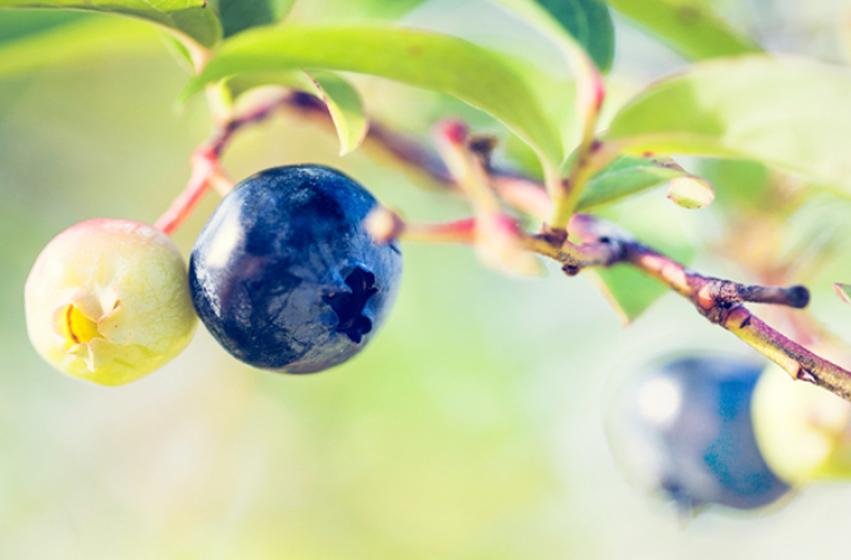
- As berries ripen, use bird net to protect the crop. It may not happen in the first few years of production, but eventually the birds may learn just how good those little blue berries are. Bird net covers are an excellent solution to this problem. We recommend constructing a simple frame to keep the net off the plants so the berries don’t get caught in the net and pop off.
- Once mature, remove old canes. As the canes mature, the productivity declines. Removing these canes stimulates the production of new ones from the root of the plant. This keeps the plant in the juvenile stage and extends the life of the plant, thus giving you more berries! The young canes are much more productive than old ones. To promote optimum performance, we recommend you remove about 1/3 of the volume of the plant during the winter each year on healthy plants.