Ever-Changing Beauty, Japanese Maples
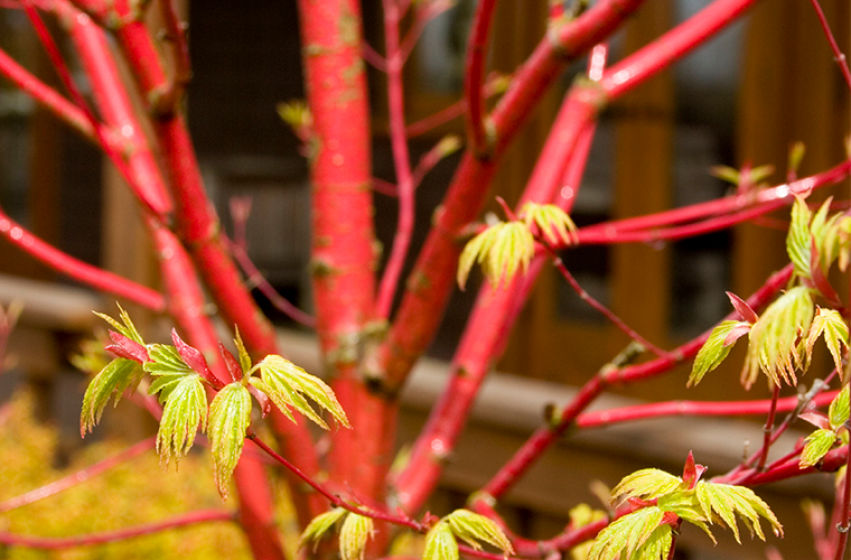
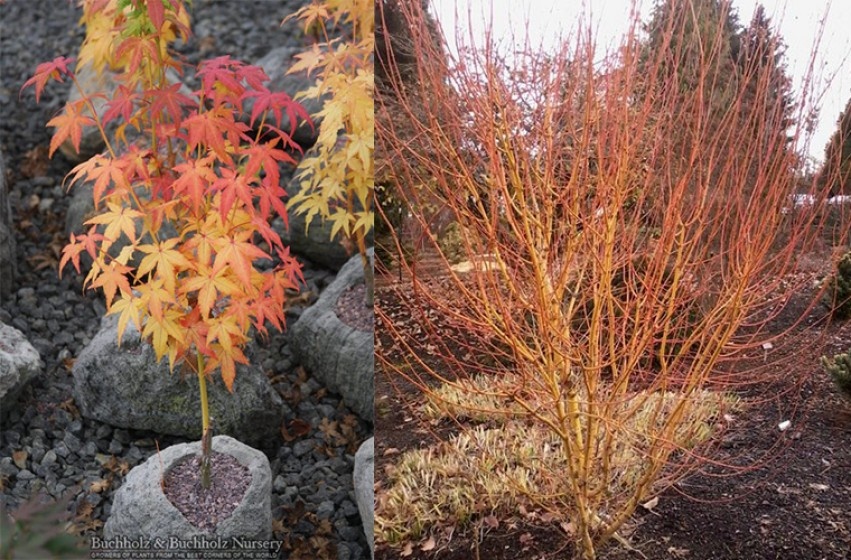
Japanese maples are truly a four-season tree, providing beauty in both color and texture in spring, summer, fall, and winter. The leaves of maples are usually the scene stealers, with their striking colors and shapes and often spectacular fall foliage colors. Yet, the bark can be quite interesting as well. While some maples produce the usual grays and browns of most trees, others have green, red, and even striped bark. Some varieties produce richly colored, exfoliating bark that curls and peels on the trunk and the thicker branches. Bark colors add dimension to the landscape and extend the season of interest all the way into the winter months. When it comes to Japanese Maple selection, the sky is the limit. Here are a few of or faves:
Sangokaku – also called the Coral Bark Maple, this beautiful, small tree has brilliant, flaming coral-red bark on young branches that intensifies in winter. The leaves emerge in spring with a flush of bright yellow-orange and change to soft green in summer providing a sharp contrast to the glowing coral bark. Autumn color is a bright tone of yellow and gold with hints of scarlet. Their non-invasive root systems make them excellent placed next to a patio or walkway. Coral Bark is also well suited for containers alone or under-planted with pansies and violas. And, because they are not large trees, Coral Bark can always be used in mixed planting borders and in foundation plantings. Prefers filtered to full sun.
Bihou (Acer palmatum) – this small, upright maple also offers stunning four-seasonal color. Spring leaf color starts out light yellow-green with a pink flush, then changes to green for summer and takes on a very bright yellow in fall. Bark on twigs and branches turns a vivid coral-yellow with an apricot overtone in winter. The Japanese name means ‘beautiful mountain range.’ Because of the showy, winter color of bark, Bihou makes a beautiful focal point in the landscape and works well in tight spaces. Prefers sun to partial shade in well-drained soil.
Photos courtesy of Monrovia