Nurture Nature – Composting at Home
What is Composting?
In simple terms, it’s a controlled breakdown of biodegradable garden or kitchen waste. All organic matter will, in time, break down through the interaction of soil microorganisms and become and excellent soil conditioner and nutrient supply for better growth of your plants, shrubs and lawn.
As communities across America become more environmentally conscious, we will want to make composting a part of our everyday life. Why wait to be forced to do something that could be so beneficial to our flowers and vegetable gardening? Composting not only makes use of our unwanted wastes, it provides us with rich organic matter that can change even the most unproductive soil into a medium that allows us to successfully grow anything we wish. And, composting keeps waste materials out of landfills where they take up space and release methane, a potent greenhouse gas.
When plants, animals, and insects die, their waste is returned to the soil. Soil microorganisms decompose them so that their nutrients can again be used by plants. Technically, composting is taking place all around us all the time. By organizing and utilizing these waste materials, we can speed up the composting process and thus become better stewards of our environment.
3 EASY STEPS TO COMPOSTING:
STEP 1: Choosing the Location. Choose a site on open ground – no pavement – that is well-drained, shaded and conveniently located near a garden hose and to the garden area to avoid hauling waste long distances.
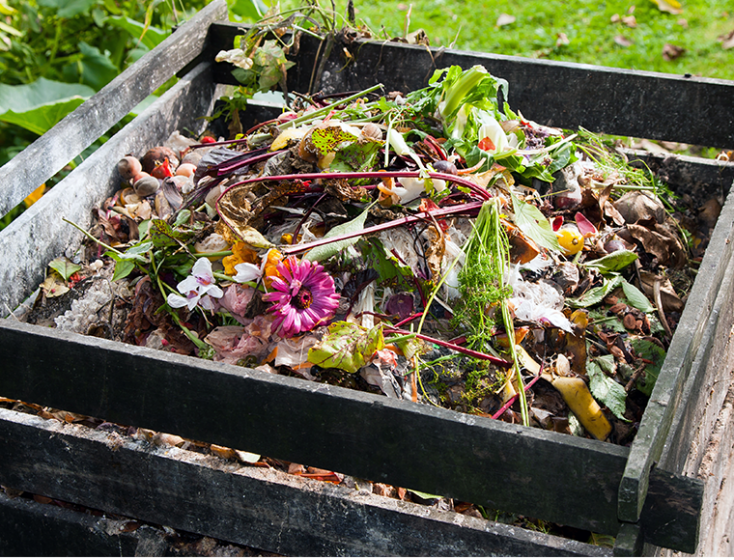
STEP 2: Building the Bin. The compost bin should be 4-6 feet square and allow you to pile garden wastes about 4 feet high. The bin needs to have openings in its sides so that air can penetrate the pile so that the fungi and bacteria that are doing the composting can get enough oxygen.
STEP 3: Combining the Ingredients. Begin your compost pile with a 4-6inch layer of organic matter. This layer can include straw, sawdust, leaves, garbage, twigs and branches, weeds, shredded black and white newspaper – in short, you can use any organic material except human fecal matter, diseased animals, and toxic materials. Avoid bones, meat, dairy products and grease because these may attract animals to dig in your compost bin. If you shred the material first, it will compost more quickly. A lawn mower will shred most material easily.
Cover this layer with 1-2 inches of good soil or well-rotted compost. Sprinkle a small layer of composting organic matter (such as Natural Guard Compost Maker) according to label instructions. This will speed up the process by introducing the microorganisms needed for decomposition. The surface of the pile should slope toward the center, forming a basin to collect water. Water well and repeat the layering process. Every 3-4 weeks, stir the contents, making sure you bring the outer edges to the center.
The interior of the compost heap will heat up to about 140 degrees F. as the microorganisms do their job. Also, the pile will gradually shrink in size. Fully mature compost resembles suppression, a light, rich loam that has a sweet, earthy smell. Congratulations! You have now turned trash into treasure!
TYPES OF COMPOSTERS:
Yard Pile – among the most popular outdoor composter options is the yard pile; which consists of compost materials, including leaves, twigs, weeds, grass clippings, and kitchen waste.
Tumbler Composter – is another popular type of composters because of its ease of use. Instead of needing to manually turn the compost pile, the tumbler design makes it easy to regularly mix the contents of your composter for faster decomposition.
Worm Composter – uses worms to recycle food scraps and other organic material into a soil amendment called vermicompost, or worm compost. Worms eat food scraps, which become compost as they pass through the worm’s body. We recommend using the red wiggler, also known as trout or manure worms.