Powdery Mildew Alert
Everyone knows that April showers bring May flowers, but recently Hampton Roads has experienced more than its fair share of rain. And even though rain is good for plants, these unusually wet conditions can lead to the development and spread of many diseases that affect plants and vegetables. Prolonged periods of leaf wetness and humidity can create conditions that are ideal for disease development like powdery mildew.
What is the powdery mildew?
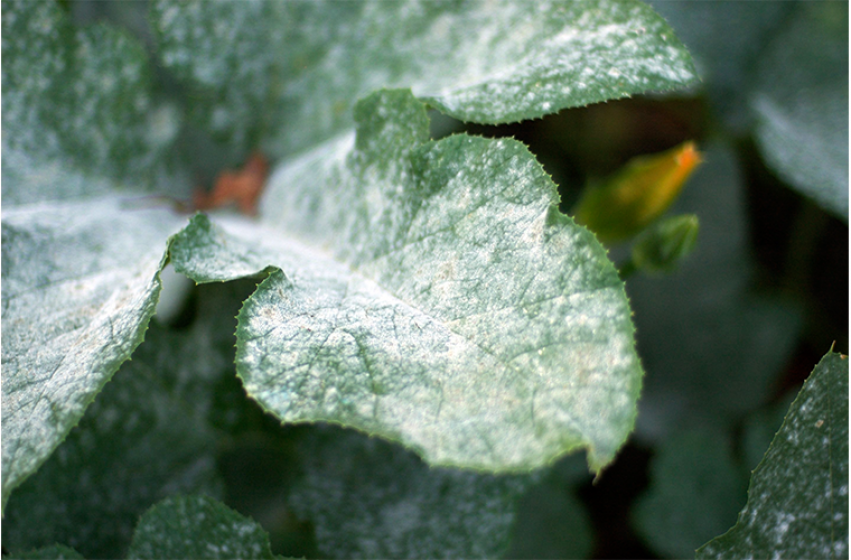
Powdery mildew is one of the most widespread and easily identifiable plant fungal diseases; it looks just like its name. The mildew forms a white or gray powdery film on a plant’s leaves, stems and fruit. From vegetables to roses, ornamental trees and shrubs, almost no type of plant is immune.
Where does powdery mildew start?
Mildew typically starts on a plant’s lower leaves and untreated can spread over the entire plant. When the leaves become covered with the fungus, photosynthesis is affected and leaves will begin to turn yellow and drop off. As a result, the plant will become stressed and will not flower or fruit.
All forms of powdery mildew are not the same.
There are many forms of powdery mildew and each is species specific. Grapes will suffer from the powdery mildew that affects only grapes, roses suffer from rose powdery mildew, and so on. Although all plants can suffer from the fungus, certain species are more susceptible. Some more frequently infected woody ornamentals include lilac, dogwood, azalea, sycamore and rose. Many perennials may also become plague-ridden, including garden phlox, bee-balm, aster, yarrow, coreopsis and rudbeckia.
Can I prevent powdery mildew?
Preventing the spread of powdery mildew is the best and most cost effective way of dealing with the fungus. Here are a few tips to help combat the fungus in your garden:
Do not crowd plants – adequate plant spacing will help to increase the air circulation around plants to discourage disease development.
Do not grow susceptible plants in the shade – although powdery mildew prefers warmth, it does not tolerate high temperatures. Plants that are shaded most of the day will stay cooler encouraging the growth of mildew.
Cleanup and dispose of infected leaves and stems – cleanup and remove or trim infected leaves and stems and dispose of them.
Water soil, not the plants – splashing the leaves with water can spread the spores, so be sure not to water from above. Run a hose to the base of your plants instead of using a sprinkler system.
Apply a fungicide like Neem – neem is an effective organic fungicide for the prevention and control of various fungal diseases including powdery mildew and can be safely applied on fruits, nuts, vegetables, herbs, spices, roses, houseplant, flowers and trees & shrubs. Neem oil is extracted from the neem tree, native to India, and is a natural insecticide/fungicide that is kinder to beneficial insects and mammals.
For more serious issues with powdery mildew – use Fertilome Systemic Fungicide to control and rid your ornamental plants of the fungus. For use on ornamental plants only, not for edible plants.