Why Wait?
FORCING SPRING-BLOOMING BRANCHES
Tired of waiting for spring and the beautiful blooms it brings? Now you don’t have too! By forcing spring-blooming branches to bloom, you’ll get that early color you’ve been craving. The process of encouraging early flowering is appropriately called ‘forcing’. To force plants to bloom early, simply bring them indoors to mimic springtime conditions.
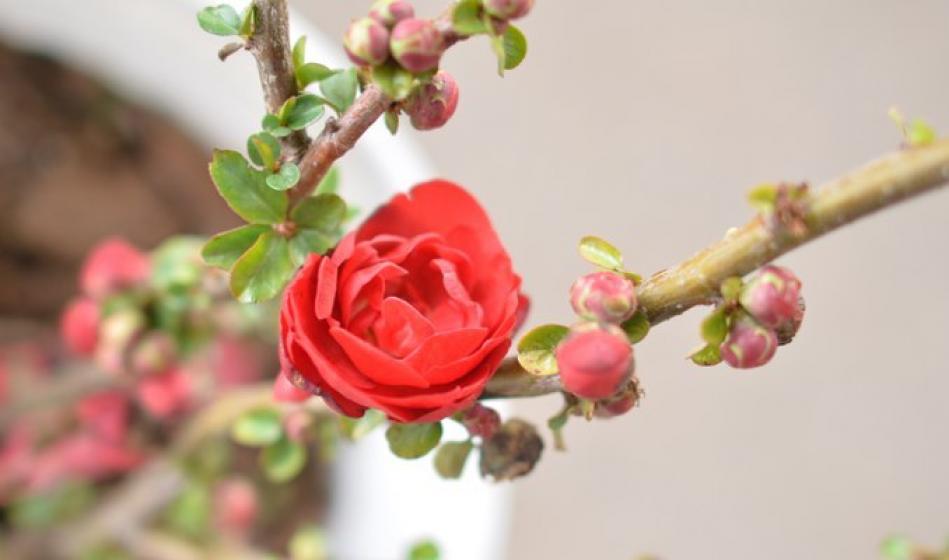
Take advantage of local flowering trees like quince, forsythia, crabapple, and serviceberry as they provide excellent indoor flowers when forced. Why wait, jumpstart your spring by following these easy steps.
STEP 1: Select branches that are 12-24 inches long with evident flower buds. There will be two kinds of buds: LEAF buds and FLOWER buds. Flower buds are usually larger and rounder than leaf buds. If possible, pick a warmer winter day to collect your branches.
STEP 2: Cut the branches at a 45 degree angle and immediately place them in a tall vase with room temperature water. It is important to keep fresh water in the vase and change the water when it becomes cloudy.
STEP 3: Place the vase holding your branches in an area with low light and cool temperatures(approximately 60-65 degrees). Mist your branches a few times each day to prevent the buds from drying out. Once the beautiful flowers begin to emerge, move your vase to a brighter location, but keep it out of direct sunlight. To prolong the blooms, keep the vase in a cool spot, away from direct heat sources and remember to change the water everyday. Enjoy!