GET THIS LOOK!
DO-IT-YOURSELF STRING GARDENS
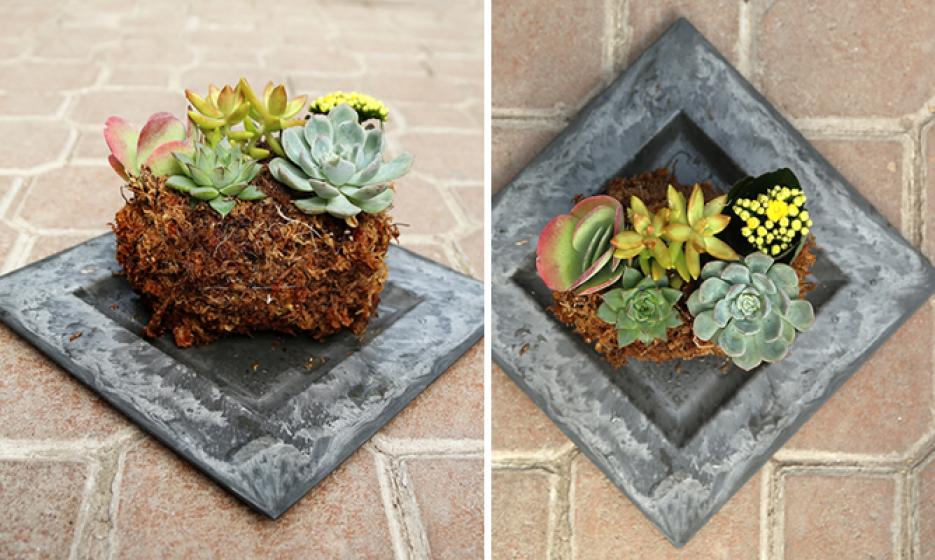
Some call it string art, some call it Kokedama and some just call it unique. Whatever you call it, these interesting moss-covered gardens held together with string find their roots in the century old art form called kokedama. A form of bonsai, the Japanese have enjoyed moss balls for centuries and just recently the West has caught on to this unique art.
Loosely translated, “Ko ke” means moss and “dama” means ball. Its history began, as a poorer mans bonsai due to its inexpensive requirements and easy to do technique. The simplicity of these moss balls are what makes them so interesting and you are not constrained by a pot. We recommend any small sized plant around 4-inches that has an interesting shape. We especially love using orchids, ponytail palms, rabbit foot ferns and succulents.
What You’ll Need:
- Clear Fishing Line or Twine
- Orchids, Ponytail Palms, Rabbit Foot Ferns and Succulents
- Sphagnum Moss
- Rubber Gloves
- Bucket of Water
- Scissors
- Shallow Container or Hanger
- Soak sphagnum moss in water. We do suggest that when working with sphagnum moss you wear rubber gloves.
- Remove the root system of the plant from its container.
- Surround the root system in a mud cake of sphagnum moss.
- Once the roots are completely covered, wind fishing line or twine around it to secure the moss in place.
- Once your are finished, hang your string garden or place it in a shallow container. Enjoy!
String gardens are not exactly maintenance free, but if you use the right plants then watering shouldn’t be a problem. We recommend watering once or twice a week depending on the plant.