Mulch to Talk About
Selecting the Right Mulch
There is no one, universal mulch for everything. There are pros and cons to every mulching material. Whatever the material, mulch needs to stay put to be effective, but should also be easy to remove and apply.
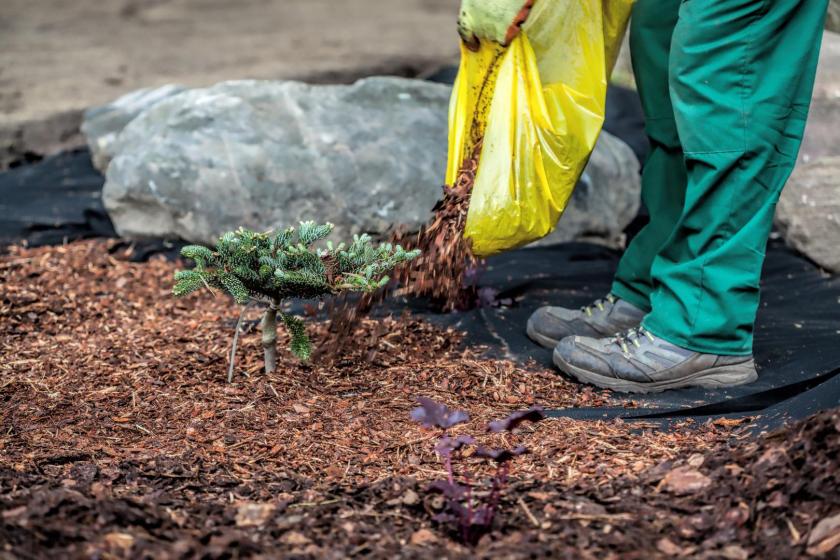
Natural mulches are very common and are composed of plant matter. Examples include straw, shredded leaves, bark, pine needles or wood chips. These mulches decompose over time, which helps improve the soil but it also means they must be replaced once or twice a year. Colored mulches are made by adding a dye to a natural mulch. They typically come in colors such as brown, black or red. Whether you’re using rich black to make your perennial garden pop or soft red to accent your home, colored mulch gives you more flexibility and creativity in your garden.
8 Tips for Magnificent Mulching
Not all plants are the same, but these basic directions provide good rule-of-thumb guidelines for applying mulch.
- Spring fever. After a long, cold winter, nothing says Spring is here like a new bed of mulch. So apply mulch in the early Spring. Not only will it look great, it will help warm the soil and make your neighbors envious!
- Stay out of the weeds. Always weed before applying mulch.
- Scratch the surface. Lightly rake the soil to loosen up the surface before mulching.
- Feed first. This is an ideal time to feed evergreen and acid-loving plants such as Rhododendrons, Azaleas, Dogwoods and Hollies with a high quality plant food like Holly-tone. So before you mulch, apply it in a circle around the drip line of shrubs or trees.
- How mulch is too mulch. A uniform depth of 2 to 3 inches works for most mulches around established plants. Mulch that’s too deep can actually smother young plants.
- No volcanoes! Never pile up mulch next to anything. Keep mulches 2 to 3 inches away from the stems of woody plants and 6 to 12 inches away from buildings to avoid pests such as rodents or termites and other insects.
- Put a ring around it. When mulching around trees, the mulch should extend away from the plant to a little beyond the drip line. The basic idea is to cover a realistic portion of the root system.
- Give it the smell test. Replenish or replace mulch when it decomposes. Mulch should smell woody
Content provided by Espoma.