Petal Perfect – Rose Care Basics
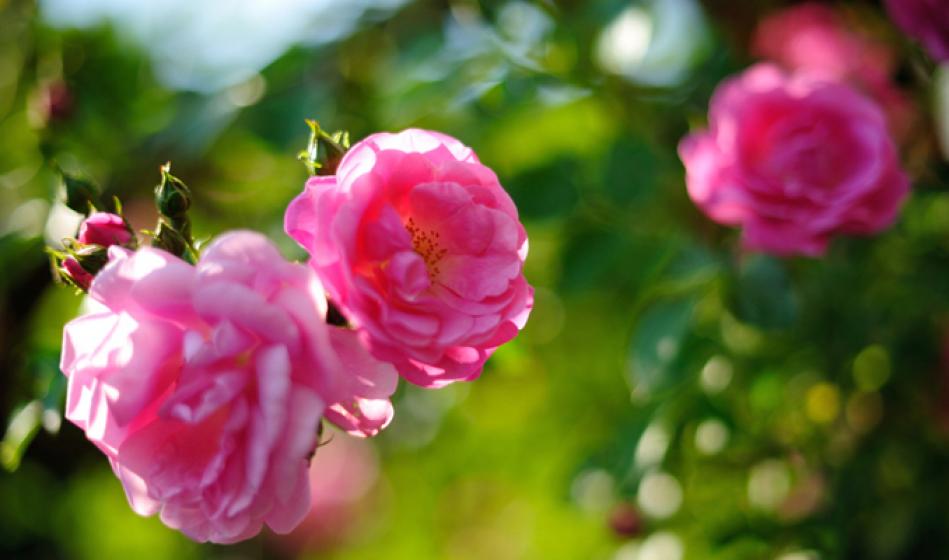
Everybody loves a rose and there are countless types to choose from, floribundas, hybrid teas, shrub and climbers are the most popular. Prized for their form, color and scent, they are a wonderful addition to any garden. All roses however have gotten a bad reputation with home gardeners as being hard to grow and labor intensive. This could not be further from the truth. With just a few simple tips, we can help you grow roses that will not only be the envy of the neighborhood but will also bring you joy for years to come.
Garden Placement – roses require a minimum of five hours of sun, so make sure you plant in an appropriate space.
Soil Conditions – rich, loamy, well-drained soil is imperative for a rose’s root system. Add compost when planting and always use mulch to keep in moisture and keep roots cool.
Planting – be sure not to plant too deep. The graft (where the large knot on the main stem is located) should be about two inches above the soil line. When planting a potted rose, remember to plant it the same depth of the soil in the pot. If planting a bare root rose, make a hill in the middle of your hole and spread the root system over it. Back fill the hole and pack soil in tightly.
Feeding – roses require a regular feeding schedule throughout the growing season. Feed with a slow release fertilizer monthly from the time you see new growth in the spring until fall. Supplement this with a good water soluble fertilizer every two weeks.
Diseases & Pests Control – roses are prone to fungal diseases and aphids. Systemic products are very useful and will help eliminate the need for a time consuming spray schedule. If you choose to do a spray schedule, make sure you are diligent and thorough. Never spray any plant when it is in direct sunlight. Damage can and will be done to foliage and flowers. Spray either in the morning or the evening.
Pruning – this is vital! Most roses bloom on two year old canes. The best rule of thumb is to prune after the plant has bloomed and prune back only the canes that bloomed this season. Climbers should never be pruned until they have been planted for two years. Most roses are grafted so be on the lookout for basal suckers, which will come up from below the graft area. Cut them off or you’ll have red roses blooming with your yellow roses!!
If you have any questions regarding roses, stop in any local McDonald Garden Center and one of our gardening experts will be glad to help you.