Plants for Waterfront Living
by Kathy Van Mullekom, a lifelong gardener and gardening writer living in York County, Virginia
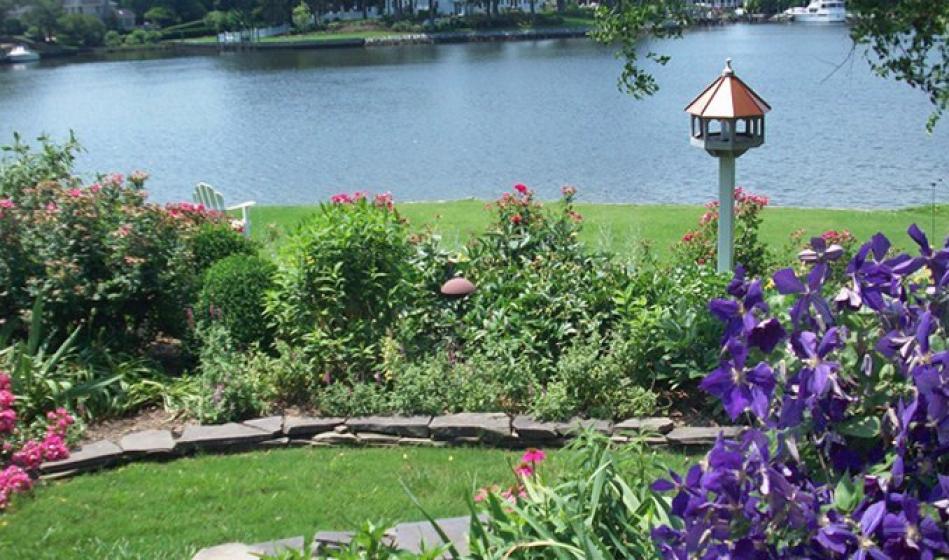
Having lived on some kind of waterway for 25 years, I’ve learned much about the good and bad of waterfront gardening.
The good is that plants are often tougher than you think they are. Our yards have been though numerous saltwater tidal floods and most of the plants thrive just fine. Happily for me and the plants, refreshing rains typically follow flooding and wash away much of any salinity in the soil.
The bad is that shallow-rooted plants like azaleas and dogwoods are not the best for waterfront gardening, especially along the water’s edge.
Our current property is designed to tolerate flooding at its worst. I find that roses, hydrangeas (blue Nikko my favorite), wax myrtles, nandinas and camellias survive occasional tidal flooding. Perennials and bulbs, too.
Our Tifway Bermuda lawn, with some St. Augustine at the point, never blinks, just keeps on growing.
So far, our three crape myrtles (dark purple my favorite color) have been through a couple of minor floods without any damage. If there is no rain after the floods, I saturate their root zone with fresh water from the outdoor faucets. Other salt-tolerant trees include most maples, ginkgo, American holly (we have a 40-year-old one that’s been flooded numerous times), sweetgum, sweet bay magnolia (got that one, too, right on the shoreline), black gum (beautiful fall color), London plane tree, oaks, bald cypress (got two that love wetness of any kind) and lacebark elm.
Coastal waterfront living also means trees must contend with winds and possible damage. Proper pruning to remove sharp v-crotches helps reduce limb breakage. Winds blowing against trees with dense foliage can push the plants over, so some light pruning to open the canopy will allow the wind to pass through without harming anything.
When and if a storm uproots one of your prized trees, especially smaller ones, you can right the tree and stake it on three sides. Odds are the tree will reset its roots and continue to be healthy. The key is to get it done quickly and keep the root system well watered, especially if it’s still hot and somewhat dry. Here’s hoping none of us have to do that anytime soon.