Revenge of the Plant Kingdom…
CARNIVOROUS PLANTS
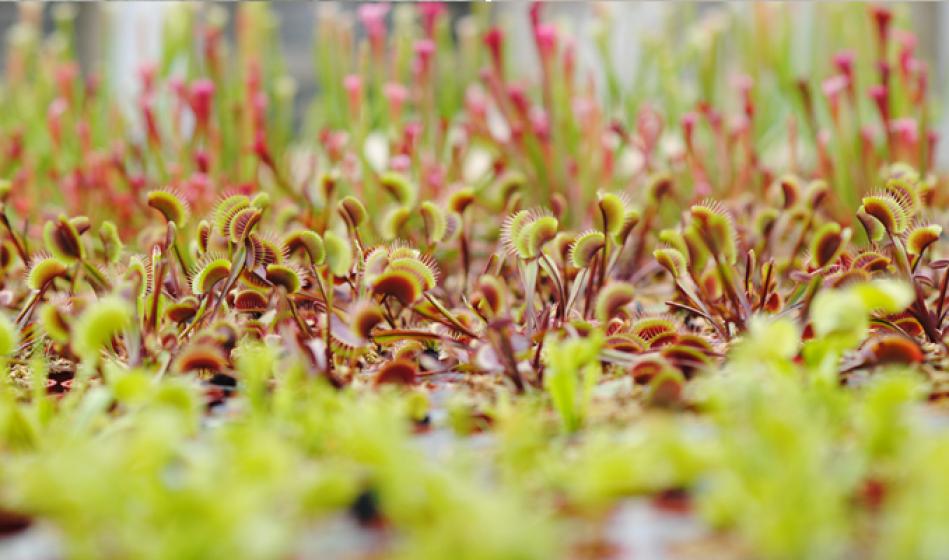
Carnivorous plants are some of the most mystifying plants in the plant kingdom and it is no surprise that the fascination with carnivorous plants has been around for centuries. This creepy vegetation likes to grow in places like bogs and rocky areas where the soil is thin or lacks nutrients. Most of these plants obtain nutrients by trapping and digesting insects. More than 600 species and subspecies of carnivorous plants have been identified, with the Venus Fly Trap being the most infamous.
Carnivorous plants have several different ways to attract their prey. Some are sweetly scented, others are brightly colored, while some have leaves or stems that are sticky or slippery or designed in a way that makes it hard for the prey to escape. Some of these plants are active captures of their prey, while others are passive only capturing those who are unlucky enough to land on them. There are five specific ways a carnivorous plant can capture its food: pit fall, flypaper, vacuum, snap trap, and lobster.
Explore this fascinating plant world with any of these carnivores that are available at McDonald Garden Center.
- The Venus Fly Trap has a head that looks like a mouthful of razor-sharp teeth, it is one of the few carnivorous plants in the wild.
- Sarracenia, or the North American Pitcher Plant, is a Genus of carnivorous plants indigenous to the eastern seaboard. The plant’s leaves have evolved into a funnel, with a hood like structure growing over the opening to prevent rain water from diluting the digestive juices.
- Nepenthes, or Tropical Pitcher Plants, are another genus of carnivorous plants with pitfall traps, there are about 130 species. At the end of the tendril, the pitcher forms first as a small bulb, which then expands and forms the cup.
Come learn more about carnivorous plants at our VENUS FLY TRAP WORKSHOP >>