Vertical Vines
by Kathy Van Mullekom, a lifelong gardener and gardening writer living in York County, Virginia
When you can’t garden horizontally because you’ve run out of room, look upward and imagine how you can garden vertically – with vines. The smallness of an urban garden forced me to turn to vines for more gardening interest. After one summer, I was hooked, caught up in the twists and turns of tendrils. My husband jokingly tells people to rescue us if they see vines crawling across our front door and down the chimney. Seriously, vines give vertical vistas to gardens, especially when you’ve gardened every square inch of any ground space.
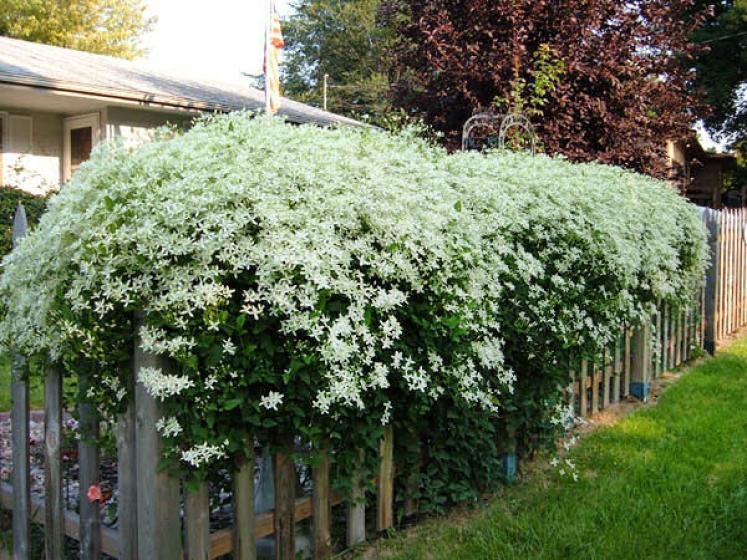
When choosing vines for your garden, plant any aggressive type, like passionflower, in a pot or be prepared to put up with their rambunctious personality. I remember the time I planted a Lady Banks climbing rose next to the house, all the while envisioning the romantic look of it climbing up the side of the house. Within a year, the rose had grown under the edges of roof shingles, so we quickly moved it to a trellis where it could do no structural harm. In addition to fences, trellises and arbors, small trees can act as temporary supports for vines, especially summer annuals like my favorite purple hyacinth vine. Avoid letting any vine cover too much of the tree’s canopy or it will interfere with the tree’s ability to make food. One of Virginia’s best native plants is Virginia creeper, a climbing vine with dark blue berries and showy red foliage in fall; its palmate leaves are often mistaken for poison ivy. You see it growing wild in many parts of Hampton Roads, including gardens because birds drop seeds from the berries. My favorite vine for showy fall flowers is another Virginia native — sweet autumn clematis. It grows wild along roadways and is also sold at garden centers. Vines that smell wonderful include early spring – flowering Carolina jessamine, as well as summer flowering climbing hydrangea, coral honeysuckle and American wisteria.
After several years of planting more vines than I can count, I learned a good lesson: Vines really do sleep, creep and leap.