Winter Pruning
PROMOTE GOOD HEALTH IN TREES & SHRUBS
by Kathy Van Mullekom, a lifelong gardener and gardening writer living in York County, Virginia
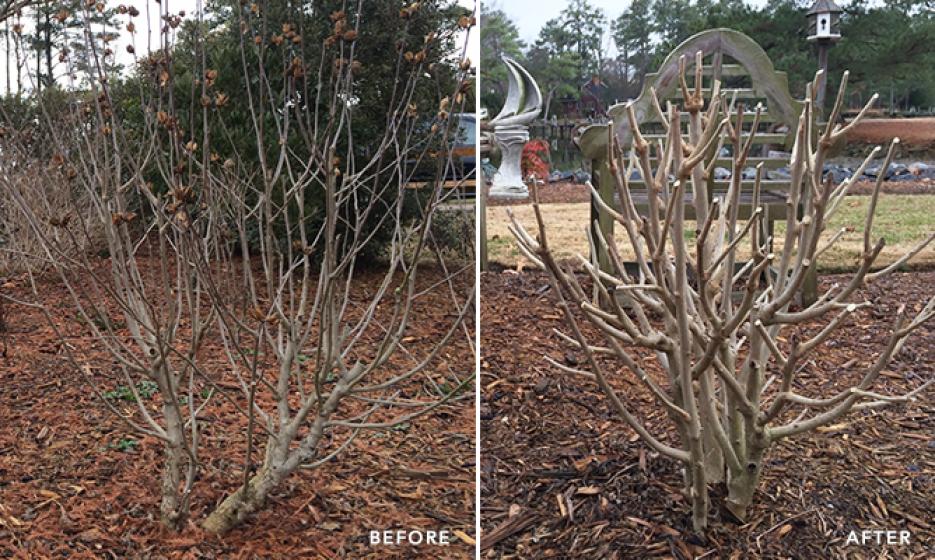
There was a time I was hesitant to prune my trees and shrubs, thinking I was doing them a disservice. Now, I prune religiously in late winter, because I’ve learned proper pruning promotes good health. The words “proper pruning” is the key element here. The goal is to remove crossing, rubbing, diseased, damaged and dying branches. Removing crossing branches opens up a plant to allow sun and light in, thereby giving pests and fungal diseases few, if any, places to thrive. This is especially important on crape myrtles, camellias and roses, which are susceptible to leaf-spot diseases that like dark, damp spots. And, please, don’t commit “crape murder” on your crape myrtles. Instead of sawing them back into short, ugly stubs, let the plants grow into their natural beautiful shapes, just as Mother Nature intended.
Roses are pruned according to the type of rose you have. Shrub roses like Knock Outs and Flower Carpets are sheared back to 12 to 15 inches above ground. Hybrid tea and other specialty roses are pruned to leave three to five strongest stems with buds directed outward.
Ornamental grasses can be pruned back to ground level anytime between now and the time new growth emerges. This year, I left the perennials intact in my pollinator garden, so beneficial insects would have a place to spend winter. I will clean up that bed around March 1.
If you are unsure about how to prune plants, follow the universal rule of pruning when flowers are finished. For instance, prune azaleas after they finish flowering but before July when they set their flower buds for next year.
When you prune, use bypass pruners for clean cuts. Disinfect your pruners between shrubs so you don’t spread disease. Lysol is a good disinfectant for your pruners. Also, clean up fallen leaves and other debris around the base of plants because pests and diseases can breed there, too.
You can find lots of helpful pruning publications, and other gardening tips, through Virginia Cooperative Extension at www.ext.vt.edu. — Kathy Van Mullekom, a lifelong gardener and gardening writer living in York County, Va. Contact her at kvanmullekom@aol.com.
photos by Kathy Van Mullekom – Rose-of-Sharon before and after pruning