Introduction to Coral Bark Maples
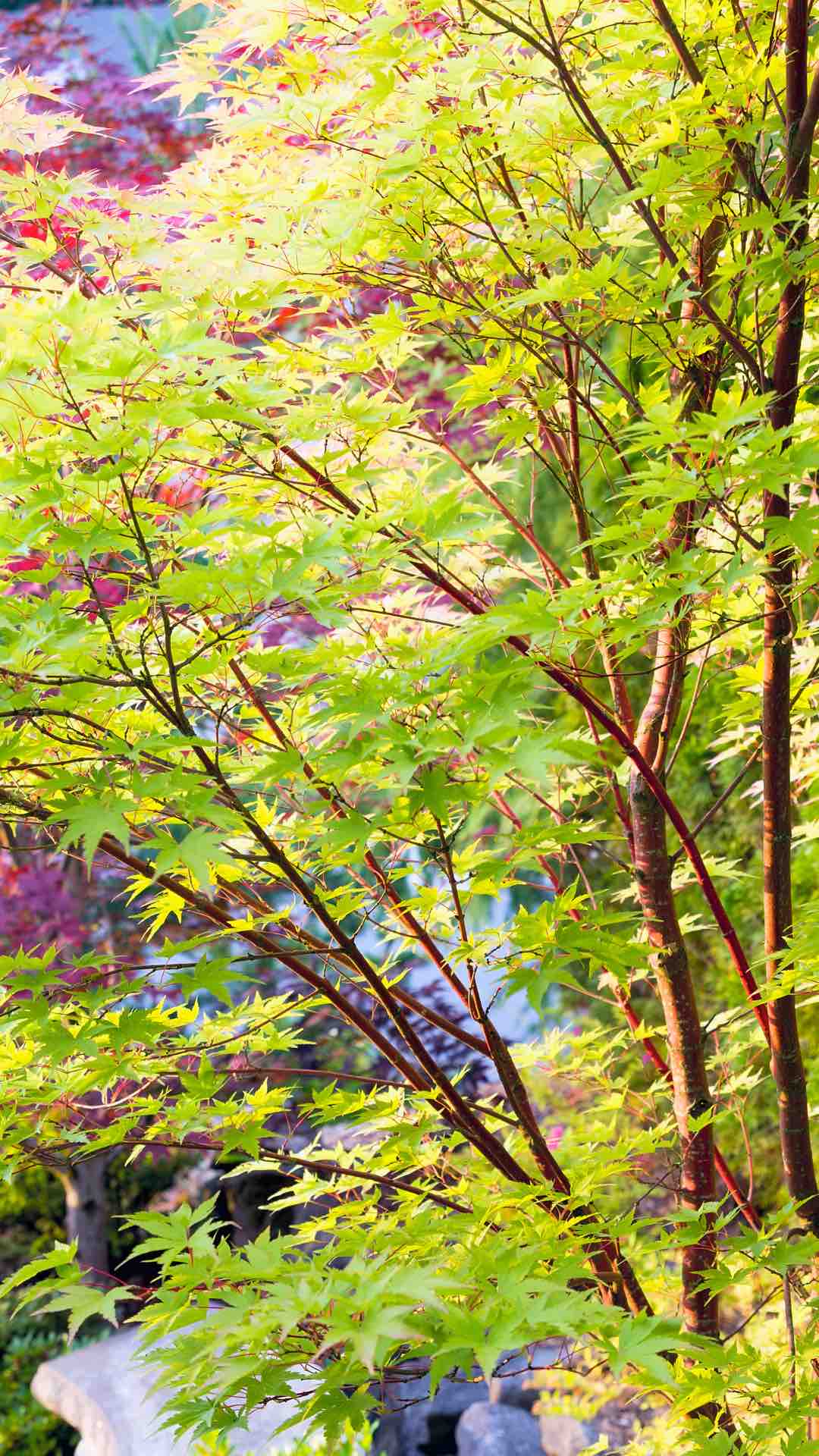
Originating from Japan, the Coral Bark Maple earns its name from the remarkable coral-red hue of its young branches. Its botanical charm lies not only in its striking bark but also in its delicate leaves that transition through a kaleidoscope of colors throughout the seasons.
Coral Bark Maples are renowned for their visual spectacle, offering a multi-faceted display of beauty. In spring and summer, their foliage emerges in shades of green, often tinged with red or orange, creating a mesmerizing contrast. As autumn arrives, their leaves transform into a stunning array of yellow, orange, and red. However, it is during the cold months that these trees truly shine, as their branches flaunt a vivid coral-red hue, providing a stark yet captivating contrast against a winter landscape.
Ideal Growing Conditions
To unlock the full potential of Coral Bark Maples, providing the right growing conditions is crucial. These trees flourish in partial shade, shielding them from scorching sunlight, especially in warmer climates. They thrive in well-draining, moist soil with a pH range from slightly acidic to neutral. Mulching around the base aids in moisture retention and helps maintain consistent soil temperatures, supporting their overall health and vitality.
Care and Maintenance:
- Watering: Adequate watering, particularly during the tree’s initial years, is essential for robust growth. Maintaining consistent soil moisture without waterlogging is key to their well-being.
- Pruning: Minimal pruning is advisable to preserve the tree’s natural shape and remove dead or damaged branches. Late summer or early autumn, during dormancy, is the ideal time for pruning.
- Fertilization: Applying a balanced fertilizer in spring can bolster healthy foliage and bark development. However, exercising caution to avoid over-fertilization is crucial to prevent harm to the tree.
By providing the optimal conditions and minimal care, these trees not only survive but thrive, enchanting admirers with their unique charm year after year. Whether you’re an ardent horticulturist or simply an appreciator of nature’s wonders, Coral Bark Maples undoubtedly hold a special place as an ornamental gem in the botanical realm. To keep inspired and grow with us, follow us on Facebook, Instagram, Pinterest, and TikTok to dig into the joys of gardening!